
Reggaetón Enters the Museum—On Its Own Terms
For years, reggaetón has been misread by cultural gatekeepers as noise rather than narrative—too sexual, too loud, too working class to be treated as heritage. That dismissal has never been accidental. It reflects long-standing hierarchies about what counts as “serious” culture and who gets to define it. The Museum of Contemporary Art Chicago (MCA Chicago) is now challenging that legacy with an ambitious new exhibition that positions reggaetón not as an entertaining footnote, but as a cultural force with political, spiritual, and historical weight.
Inside MCA Chicago’s “Dancing the Revolution” Exhibition
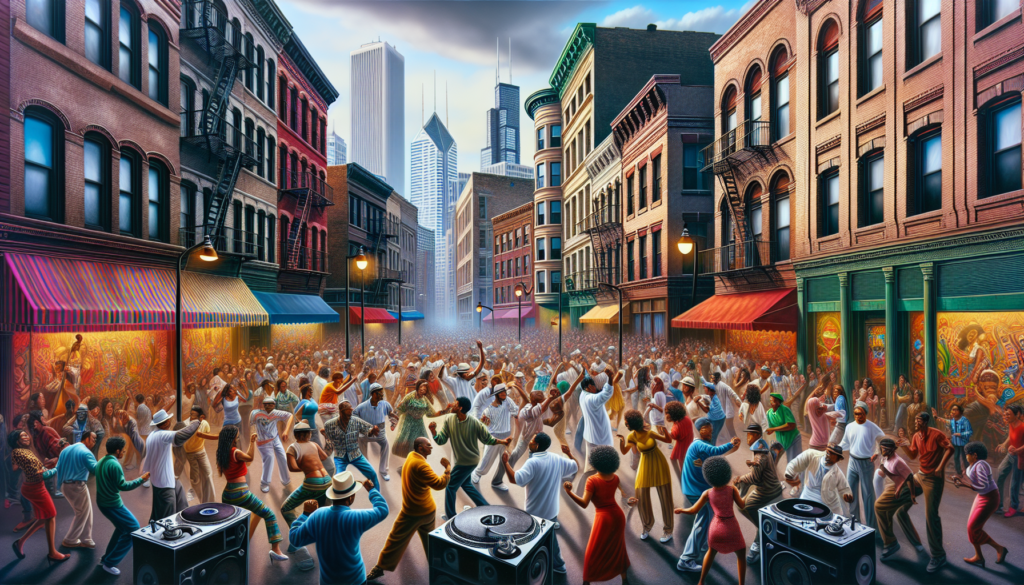
According to the museum, Dancing the Revolution: From Dancehall to Reggaetón “explores and expands the visual, political, and spiritual histories of dancehall and reggaetón through contemporary art.” The exhibition traces a complex geographic and cultural route—moving from Kingston to San Juan, and through Panama, New York City, and London—to show how sound, movement, and Black Atlantic memory circulated across ports, diasporas, and colonial afterlives.
This framing matters. It does not “clean up” reggaetón to make it palatable to elite spaces. Instead, it treats the genre as a living archive of migration, neighborhood invention, and Caribbean modernity—one that developed through dance, style, language, and public life as much as through recorded music.
Why Museum Recognition Has Been So Uneven
Reggaetón has appeared in U.S. museums before, but often with hesitation—filtered through safe narratives of pop success, celebrity, or generalized “Latin music” history. As scholar Lauren Chalk argues in a 2025 article in Curator: The Museum Journal, the genre’s public reception has long been shaped by class- and race-based hierarchies. While Puerto Rico is “generally acknowledged to be the home” of reggaetón, Chalk notes that the music’s late-1990s and early-2000s formation in working-class neighborhoods and public housing developments helped intensify backlash, censorship, and moral panic.
Those origins are inseparable from reggaetón’s cultural meaning. And they help explain why institutions have historically treated it as an “awkward” subject—something too contemporary, too embodied, too politically charged to fit within what Chalk describes as “authorized heritage discourse,” the system by which museums and cultural authorities decide what qualifies as heritage at all.
Chicago Changes the Scale of the Conversation
What sets MCA Chicago apart is not merely that it includes reggaetón, but that it elevates dancehall and reggaetón into a rigorous curatorial argument about colonialism, Black Atlantic history, and collective liberation. This is not a small community showcase that can be dismissed as local, nor an industry museum where music can be flattened into memorabilia. MCA Chicago is one of the country’s major contemporary art institutions, and it is treating these genres as engines of visual culture and political imagination.
In doing so, the museum effectively acknowledges what audiences and communities have long insisted: reggaetón was always bigger than the ways institutions tried to contain it.
From Sound to Visual Culture: What the Show Includes
According to the MCA, Dancing the Revolution features painting, sound sculptures, installations, photographs, and video, presenting work by more than forty contemporary artists. The list includes internationally recognized names such as Isaac Julien, Edra Soto, Alberta Whittle, Carolina Caycedo, and Lee “Scratch” Perry—artists whose practices help locate music and dance within wider histories of power, place, and representation.
A special commissioned mixtape by Juan Rivera focuses on Panama’s role in the evolution of these genres, highlighting “the iconic songs that have paved the way for the global phenomenon of reggaetón.” That choice is also a statement: the exhibition is not simply interested in reggaetón as a global product, but in the routes and communities that made it possible.
Key Themes the Exhibition Brings Forward
- Black Atlantic continuity: tracing the genres through migration, colonial histories, and diaspora networks.
- Embodied politics: treating dance as a language of resistance, not a spectacle for judgment.
- Working-class cultural production: centering the neighborhoods and social worlds often erased from “official” heritage narratives.
- Artistic influence and exchange: showing how these sounds generate images, aesthetics, and spatial practices.
Reggaetón as Protest, Not Just Pop
The exhibition’s title draws partly on Puerto Rico’s “Verano del 19,” the Summer 2019 protests in San Juan that demanded the resignation of then-Governor Ricardo Rosselló. The MCA notes that on July 17—the day Rosselló resigned—LGBTQ+ and feminist activists led perreo combativo (“combative twerking”) on the steps of San Juan Cathedral, transforming reggaetón’s dance language into direct political action.
This moment complicates one of the oldest narratives used to dismiss the genre: that its dance culture is merely vulgar or apolitical. Instead, the exhibition treats dance as a method of reclaiming public space, asserting autonomy, and building collective power—what the museum describes as “bold acts of collective resistance and emancipation.”
A Long-Overdue Correction to Cultural Memory
Chalk’s research also highlights a deeper institutional problem: in Puerto Rico and across the diaspora, official cultural discourse has often celebrated “folkloric” traditions while treating contemporary Black musical practice as less worthy of preservation. That split creates a harmful fiction—one that confines acceptable Blackness to the past and denies living communities their heritage in the present.
MCA Chicago’s exhibition refuses that division. It insists that reggaetón belongs inside history, not outside it; inside aesthetics, not beneath them; inside political narrative, not beyond it.
The Museum Isn’t Making Reggaetón Valuable—It’s Catching Up
Ultimately, the significance of this moment is not that a major museum has “validated” reggaetón. The genre did not become worthy when it entered a gallery. It has carried meaning for decades through the people who created it, danced it, archived it, studied it, and lived alongside it—across islands and cities shaped by migration, policing, labor, and aspiration.
Source: Reggaetón Has Arrived at the Museum of Contemporary Art Chicago, and It’s About Time