
A First-of-Its-Kind Exhibition Linking Music, Movement, and Political Power
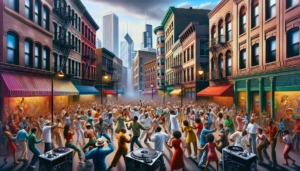
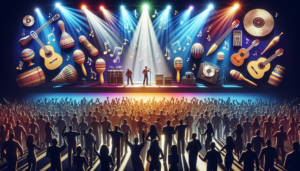
Chicago’s Museum of Contemporary Art (MCA) has debuted Dancing the Revolution: From Dancehall to Reggaetón, a landmark exhibition that reframes two globally influential genres as engines of Caribbean activism, migration, and cultural memory. Curated by Carla Acevedo-Yates, the expansive show fills the museum’s entire fourth floor and brings together works by more than 40 artists across painting, sculpture, photography, mixed media, and sonic installation—plus several new commissions created specifically for this presentation.
Designed to be both approachable and intellectually deep, the exhibition invites visitors to experience Caribbean political expression not only through wall text and archival material, but through sound, participation, and spaces built for gathering. In doing so, the MCA positions dancehall and reggaetón not as background music to history, but as living, evolving forms of public speech.
Carla Acevedo-Yates’ Personal Throughline: From Puerto Rico to Chicago
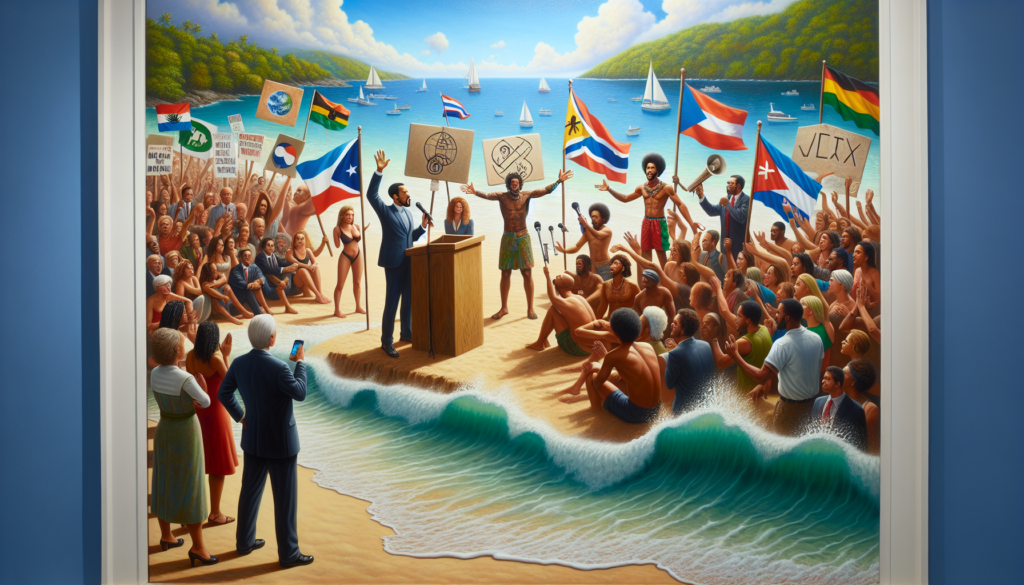
The exhibition also carries a personal resonance for Acevedo-Yates, who was born and raised in Puerto Rico and has followed the island’s political struggles from Chicago. Her research began years before the opening, but its emotional center is tied to the mass mobilizations of 2019, when Puerto Ricans flooded the streets to demand the resignation of Governor Ricardo Rosselló after leaked messages exposed corruption and callousness in the wake of Hurricane Maria.
What distinguished those demonstrations, she emphasizes, was their choreography of resistance: people protested on kayaks and horseback, incorporated yoga and aerial movement, and turned familiar dances into collective statements. When Rosselló resigned, one nighttime protest called by the queer community transformed into a citywide celebration—an event that underscored how Caribbean protest traditions often fuse joy with urgency.
A Longer Lineage of Joyful Resistance
Dancing the Revolution traces today’s pop icons back to older histories of cultural defiance, including Carnival traditions in Trinidad that emerged under colonial rule. The exhibition’s central argument is that these musical practices carry social, political, and spiritual underpinnings that are frequently overlooked—especially when the sounds are consumed primarily as entertainment.
By mapping these continuities, the show offers visitors a deeper understanding of how music and dance operate as communal technologies: tools for organizing, processing grief, sustaining identity, and broadcasting “daily news” from the ground.
From Jamaica and Panama to the World: Migration as the Engine
Rather than presenting dancehall and reggaetón as isolated cultural products, the MCA exhibition emphasizes their intersecting origins and migratory routes—linking Jamaica and Panama to Latin America, the United States, and Europe. A documentary shown near the entrance frames dancehall as both a genre and a place: a gathering space where the “voice of the people” is amplified and circulated.
That framework sets up one of the exhibition’s most compelling themes: you cannot pinpoint these genres to a single location. Their evolution is inseparable from movement—of labor, language, records, and communities—across borders shaped by colonialism and economic extraction.
Key Ideas the Exhibition Highlights
- Dancehall as public discourse: music as on-the-street reporting, community critique, and spiritual practice.
- Reggae en Español as translation and reinvention: Spanish-language reggae emerging through Caribbean labor migration, including workers connected to the Panama Canal.
- Global feedback loops: how Caribbean sounds influenced U.S. hip hop and pop, traveled across the Atlantic, and returned through new hybrid forms.
- Embodied politics: protest not only as slogan and sign, but as dance, style, performance, and collective motion.
Breaking Museum Conventions Through Participation
One of the exhibition’s most distinctive qualities is its insistence that visitors do more than look. Throughout the galleries, Acevedo-Yates builds environments that echo dancehall’s social function—spaces that encourage gathering, listening, and play. The result is an exhibition that deliberately disrupts the usual codes of museum quiet and distance.
Interactive elements—such as a karaoke room, a functioning jukebox stocked with reggaetón, and installations that merge sound with tactile experience—position the visitor inside the culture rather than outside it. These design choices also sharpen the exhibition’s political thesis: participation is not a novelty, but a metaphor for how music scenes create solidarity and convert private feeling into public energy.
Artworks That Connect Pop Culture to Protest
Across the fourth floor, the exhibition moves between archive and spectacle, intimacy and mass mobilization. Photographic works and sculptural statements link global celebrities to street-level activism, while sound-driven installations foreground the technologies—speakers, mixes, dance floors, cars, and clubs—that make a scene possible.
At the same time, the show tracks how Caribbean aesthetics have been contested, appropriated, and reclaimed—shaping visual and sonic languages in U.S. culture and resurfacing in queer performance spaces. By situating these shifts within broader histories of migration and power, Dancing the Revolution frames the dance floor as a site where politics is rehearsed in real time.
Why This MCA Exhibition Matters Now
In an era when many museum shows prioritize detached observation, Dancing the Revolution: From Dancehall to Reggaetón argues for a different model—one where contemporary art can be rigorous without being remote, and where activism is understood not only through documents and speeches, but through rhythm, movement, and collective celebration.
Ultimately, the MCA’s exhibition offers a timely reminder: in the Caribbean and its diasporas, music is rarely “just music.” It is a record of migration, a language of survival, and a choreography of resistance—played loudly enough to be heard across borders.
Visitor Information
Dancing the Revolution: From Dancehall to Reggaetón is on view through Sept. 20 at the Museum of Contemporary Art Chicago, 220 E. Chicago Ave. For tickets and hours, call 312-280-2660 or visit mcachicago.org.
Source: First-of-its-kind MCA exhibition plays the beat of Caribbean activism