

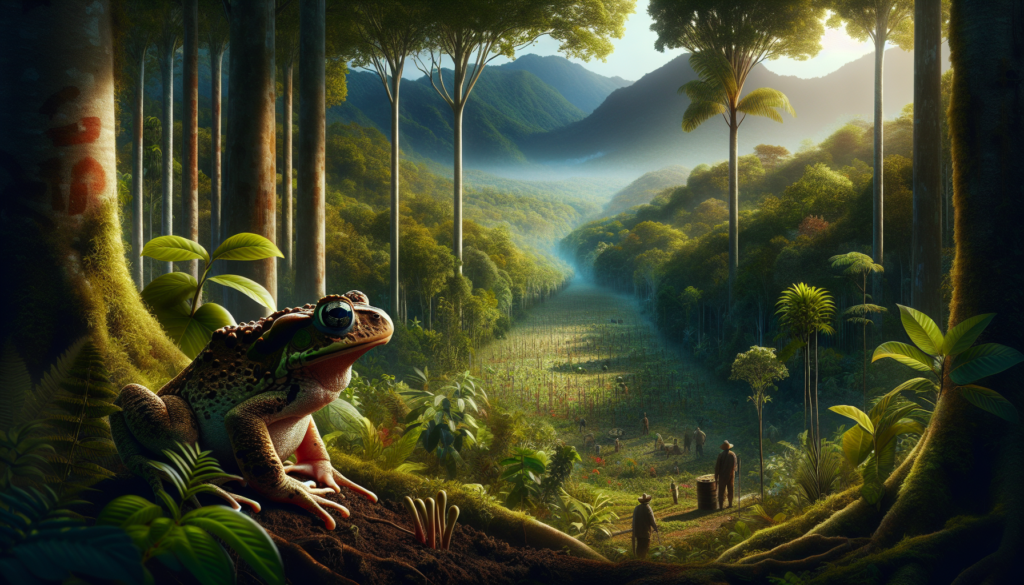
A toad in the spotlight—and a warning from history
For many viewers, the Puerto Rican crested toad appeared unexpectedly in popular culture when it was featured during Bad Bunny’s halftime show. Yet the species’ significance extends far beyond a brief moment on screen. As Puerto Rico’s only native toad, the crested toad has become a symbol of both what the island has lost through centuries of environmental change and what it can regain through sustained habitat restoration.
Its recovery is closely linked to one of the most important conservation tools in the Caribbean: reforestation. By rebuilding forests and reconnecting damaged ecosystems, conservationists are improving the conditions the crested toad needs to survive—along with many other endemic species.
How deforestation pushed the crested toad to the brink
Puerto Rico’s landscapes were dramatically altered after European colonization. Large areas of native forest were cleared to make way for agriculture, including extensive sugar cane cultivation. Over time, forest loss and fragmentation reduced suitable habitat, disrupted natural water cycles, and simplified ecosystems that once supported diverse wildlife.
For amphibians like the Puerto Rican crested toad, these changes can be especially severe. Amphibians are highly sensitive to shifts in humidity, temperature, and water quality. When forests disappear, the shaded, moisture-retaining environments that buffer heat and support breeding sites often vanish as well. The result is a landscape that becomes less hospitable for a species already limited to a small geographic range.
Why reforestation is more than planting trees
Reforestation efforts in Puerto Rico have increasingly focused on restoring ecological function, not simply increasing tree cover. Healthy forests regulate water flow, stabilize soils, and create microclimates—cooler, more humid conditions that can help amphibians avoid dehydration and thermal stress.
Effective habitat restoration typically involves:
- Rebuilding native plant communities that support local food webs and provide appropriate structure for wildlife.
- Improving watershed health so seasonal ponds, wetlands, and other breeding areas are more reliable and less polluted.
- Reducing fragmentation by connecting forest patches, allowing animals to disperse and maintain genetic diversity.
- Letting natural processes lead, using site-specific strategies that reflect how Puerto Rican ecosystems regenerate over time.
For the crested toad, these benefits can translate into more stable breeding conditions, safer shelter, and healthier surrounding ecosystems that support the insects it depends on.
Hacienda La Esperanza: a living example of habitat recovery
One of the most vivid examples of reforestation in action is Hacienda La Esperanza, a nature preserve managed by the Puerto Rican nonprofit Para La Naturaleza. The preserve contains a mosaic of habitats, including coastal forests and beach ecosystems, demonstrating how restoration can support biodiversity across multiple landscape types.
As forest structure returns and ecological processes recover, endemic birds and other native wildlife gain new opportunities to feed, nest, and move through the landscape. The Puerto Rican crested toad is among the species benefitting from these improving conditions—an important reminder that protecting a single endangered animal often requires restoring an entire ecosystem.
Reintroduction and recovery: pairing restoration with species management
Reforestation is a foundation, but it works best when combined with targeted wildlife management. The crested toad’s decline created an urgent need not only to repair habitat but also to actively bolster populations where the species had become rare or disappeared.
Conservation programs have used reintroduction and careful monitoring to re-establish populations while ensuring restored areas can support them. This approach reflects a broader conservation lesson: habitat restoration and species recovery are most successful when planned together, guided by science, and sustained over years rather than seasons.
What the crested toad teaches about restoration in Puerto Rico
The Puerto Rican crested toad’s story is ultimately about resilience—of a species, of ecosystems, and of conservation efforts that learn from past damage. Reforestation is helping reverse the legacy of deforestation by rebuilding forests that support endemic wildlife and by strengthening natural systems that people rely on as well.
Just as importantly, the toad’s rising visibility underscores a critical truth in modern conservation: cultural attention can spark curiosity, but long-term recovery depends on patient, place-based restoration. In Puerto Rico, the return of forests is not only reshaping the landscape—it is creating the conditions for one of the island’s most distinctive amphibians to persist into the future.
Source: LISTEN: Reforestation, reggaeton and the recovery of Puerto Rico’s crested toad