
Bad Bunny’s Claim and the Question of Origin
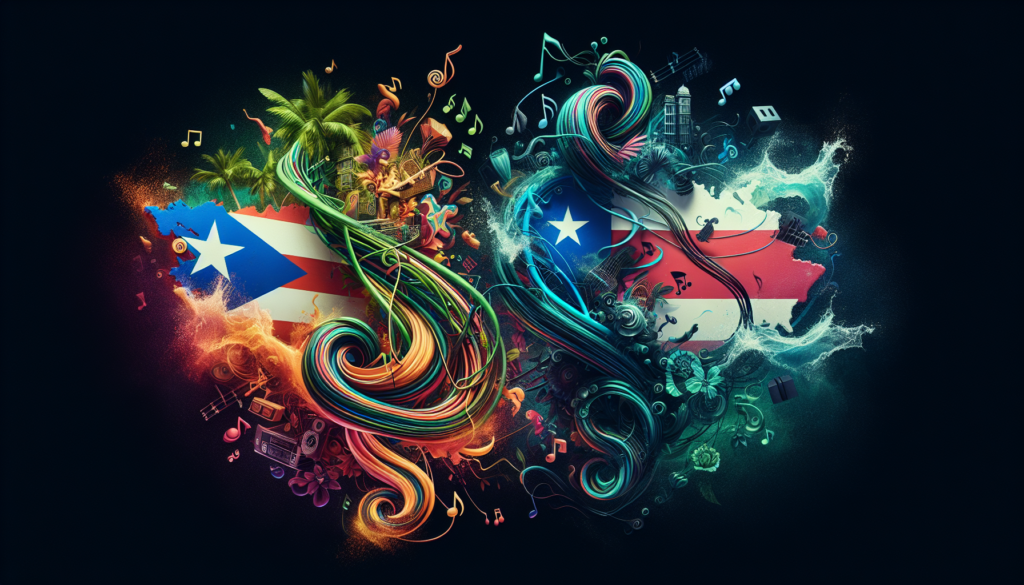
Bad Bunny often underscores Puerto Rico’s central role in reggaeton’s global identity. In lyrics that proclaim “you’re listening to music from Puerto Rico,” he echoes a widely held perception: that the island didn’t just popularize reggaeton—it created it. Puerto Rican artists undeniably transformed reggaeton into a worldwide commercial force, shaping its modern sound, aesthetics, and reach. Yet the genre’s earliest foundations were laid elsewhere.
Reggaeton’s deeper origin story begins in Panama, where it emerged from a dense overlap of languages, migrations, and political pressures. Understanding why the genre is frequently claimed as Puerto Rican, while historically rooted in Panamanian musical experimentation and protest, requires looking beyond chart success and into the social conditions that produced its earliest forms.
Panama’s Cultural Crossroads: Language, Labor, and Migration
Panama’s unique position as a transit corridor made it a meeting point for empires, workers, and displaced communities. After gaining independence from Spain in 1821, Panama became part of Gran Colombia. During the 19th century, industrial growth and infrastructure projects drew waves of Afro-Caribbean migrants to northern Panama, many from former British colonies. These newcomers often spoke English, while many Afro-Panamanians—descendants of enslaved Africans—primarily spoke Spanish.
Over time, this created two broad Black communities shaped by distinct colonial histories and languages: Spanish-speaking Afro-Panamanians and English-speaking West Indians. They worked side-by-side on major projects such as the trans-Isthmus railroad, but differences in culture and status frequently produced friction, even as both groups confronted racial discrimination.
The Canal Zone and the Importation of Jim Crow
When Panama became an independent nation in 1903, U.S. support came with strategic conditions—most notably American control over the Panama Canal Zone. During the canal’s construction, the Canal Zone became a heavily managed enclave where racial segregation structured everyday life. Workers were separated into “gold roll” and “silver roll” categories: the former typically white workers with better pay and services, the latter largely Black laborers assigned the most dangerous tasks.
These divisions were more than bureaucratic labels. They shaped access to sanitation and health care and contributed to disproportionate Black suffering from disease and hazardous working conditions. Police brutality also marked the era, including harassment of Black women by white officers. While both Afro-Panamanians and West Indian migrants endured discrimination, English-speaking West Indians were sometimes treated more favorably than Spanish-speaking Afro-Panamanians—fueling resentment and intensifying intra-Black tensions.
Those tensions helped spur panameñismo, a nationalist movement aimed at strengthening Spanish language and identity. In practice, it also supported policies restricting West Indian immigration and stripping citizenship from second-generation West Indians. Even after the canal’s completion in 1914, many Caribbean families remained in Panama, sustaining cultural and musical traditions that would later feed into a new sound.
From Jamaican Rhythms to “Reggae en Español”
In the 1960s and 1970s, Jamaican musical styles—mento, ska, and dancehall—circulated in Panama, carried by Caribbean communities and transnational exchange. Early performances and recordings often used English and Jamaican Patois. Over time, however, a localized innovation took hold: Spanish-language interpretations of reggae rhythms, known as reggae en español.
By the late 1970s, reggae en español had become popular domestically and began spreading across Latin America. At the same time, hip-hop was rising in the United States and reached Panama through ongoing American influence in and around the Canal Zone. These sounds blended with local experiences to create a foundation for reggaeton: a genre built from rhythmic looping, rapping and singing, and a beat lineage tied to Jamaican dancehall’s dembow pattern.
Reggaeton as Protest Music: Early Panamanian Foundations
Like reggae and hip-hop, early reggaeton carried political weight. Its lyrics frequently highlighted racial oppression, police violence, and collective resistance. One key milestone is the 1985 release of “El D.E.N.I.” by Panamanian artist Renato, often credited as the first reggaeton song. The track condemned abuse linked to Panama’s military dictatorship and its repressive security apparatus, the Department of Investigations (D.E.N.I.).
By adopting the voice of a racist police officer, Renato exposed the everyday violence faced by Black Panamanians and residents of marginalized neighborhoods. The song resonated as a protest anthem and showed reggaeton’s early role as a vehicle for social critique—not merely dance music.
Panamanian artists and producers also developed transnational networks. Figures such as El General connected with underground dancehall and Spanish-language hip-hop scenes in New York City, collaborating with Jamaican and American artists. Even when released in more commercially accessible formats, tracks like “No Mas Guerra” retained the genre’s early impulse toward solidarity and anti-violence messaging.
Puerto Rico’s Breakthrough: Globalization and a Shift in Themes
If Panama represents reggaeton’s origin point, Puerto Rico represents its global launchpad. In the early 2000s, Puerto Rican artists brought the genre into mainstream media systems and international markets. Daddy Yankee, in particular, helped propel reggaeton to worldwide recognition, aided by broad commercial distribution and major brand advertising that pushed the sound into U.S. audiences.
Yet this mainstreaming often came with changes. Compared with the genre’s earlier protest orientation, much of the most widely promoted reggaeton leaned toward party themes, radio-ready hooks, and simplified narratives. Social critique did not disappear, but it became less central in the most commercial channels.
At the same time, Puerto Rico’s industry reflected its own racial hierarchies. Black Puerto Rican artist Tego Calderón faced discrimination shaped by anti-Blackness, even as he produced influential work that pushed against narrow standards of image and marketability. These tensions influenced how reggaeton’s identity developed: both as a commercial product and as a cultural platform contested from within.
Bad Bunny and the Return to Reggaeton’s Social Roots
Although Bad Bunny’s statements may blur the genre’s Panamanian beginnings, his music often echoes reggaeton’s earlier social conscience. Tracks addressing colonialism, displacement, and inequality align with the political urgency that characterized formative Panamanian recordings. His work has also expanded reggaeton’s gender politics, building on feminist interventions pioneered by artists such as Ivy Queen and challenging norms embedded in earlier mainstream eras.
This dual reality helps explain the debate: Puerto Rico shaped the reggaeton the world recognizes today, while Panama fostered the conditions and experiments that made reggaeton possible in the first place.
Source: Bad Bunny says reggaeton is Puerto Rican, but it was born in Panama